


Hazardous Matters July - September 2026
"Hazardous Matters" is the quarterly newsletter for PHMSA's Office of Hazardous Materials Safety (OHMS). As always, it is packed with the latest news, expert tips, and essential insights for the safe handling and shipment of hazardous materials. Stay informed, stay safe!
July - September 2026
PHMSA Modernizes Hazardous Materials Regulations with 17 Final Rules
On August 4-7, 2026, PHMSA's Office of Hazardous Materials Safety published 17 final rules under the HM-268 deregulatory initiative to modernize supply chains and reduce administrative burdens for domestic shippers and carriers.
These updates eliminate unnecessary regulatory barriers by transitioning from paper requirements to digital compliance, expanding exceptions for agricultural and trade operations, and codifying widely used special permits directly into the Hazardous Materials Regulations. This rulemaking package delivers immediate cost savings and operational relief across the industry.
A list of the final rules with links can be found below:
- HM-268A: Reducing Burdens on Domestic Aerosol Shippers: Federal Register :: Hazardous Materials: Reducing Burdens on Domestic Aerosol Shippers
- Revises the aerosol definition in § 171.8 to remove the requirement that it contain a liquid, powder, or paste. This would let small quantities of gas be shipped in aerosol containers instead of more costly cylinders or needing a special permit, aligning with international standards—helping U.S. companies compete globally.
- Revises the aerosol definition in § 171.8 to remove the requirement that it contain a liquid, powder, or paste. This would let small quantities of gas be shipped in aerosol containers instead of more costly cylinders or needing a special permit, aligning with international standards—helping U.S. companies compete globally.
- HM-268B: Reducing Costs to Domestic Shippers and Carriers of Limited Quantities: Federal Register :: Hazardous Materials: Reducing Costs to Domestic Shippers and Carriers of Limited Quantities
- Allows a smaller limited quantity marking in § 172.315(a)(2), reducing packaging and labeling costs and helping carriers move more packages per trip.
- Allows a smaller limited quantity marking in § 172.315(a)(2), reducing packaging and labeling costs and helping carriers move more packages per trip.
- HM-268C: Reducing Burdens on Domestic Companies Using Battery-Powered Equipment in Trades: Hazardous Materials: Reducing Burdens on Domestic Companies Using Battery-Powered Equipment in Trades
- Updates § 173.6 to increase the amount of lithium batteries allowed under the Materials of Trade (MOTs) exception. This would help companies using battery-powered equipment, like landscapers, to transport needed tools.
- Updates § 173.6 to increase the amount of lithium batteries allowed under the Materials of Trade (MOTs) exception. This would help companies using battery-powered equipment, like landscapers, to transport needed tools.
- HM-268D: Hazardous Materials: Reducing Burdens to Domestic Carriers: Federal Register :: Hazardous Materials: Reducing Undue Paperwork Burdens to Domestic Carriers
- Allows emergency response information (ERI) to be displayed electronically, removing the current requirement for printed copies and easing compliance for shippers.
- Allows emergency response information (ERI) to be displayed electronically, removing the current requirement for printed copies and easing compliance for shippers.
- HM-268E: Remove Redundant List of U.S. EPA CERCLA Hazardous Substances: Federal Register :: Hazardous Materials: Remove Redundant List of U.S. EPA CERCLA Hazardous Substances
- References the 40 CFR § 302.4 hazardous substance list instead of duplicating it, eliminating 27 pages of duplicative regulatory text in the 49 CFR.
- References the 40 CFR § 302.4 hazardous substance list instead of duplicating it, eliminating 27 pages of duplicative regulatory text in the 49 CFR.
- HM-268F: Reducing Burdens by Allowing Continued Use of DOT Special Permit Packaging: Hazardous Materials: Reducing Burdens by Allowing Continued Use of Department of Transportation Special Permit Packagings
- Allows continued use of DOT special permit (SP) packaging for its full lifespan, even if the permit is not renewed or the original holder no longer exists.
- Allows continued use of DOT special permit (SP) packaging for its full lifespan, even if the permit is not renewed or the original holder no longer exists.
- HM-268G: Improving Efficiencies for Special Permits and Approvals Renewals: Hazardous Materials: Improving Efficiencies for Special Permits and Approvals Renewals
- Removes the rule requiring special permit renewal applications sixty days before expiration. This would reduce paperwork and allow permit use provided the renewal is filed before expiration.
- Removes the rule requiring special permit renewal applications sixty days before expiration. This would reduce paperwork and allow permit use provided the renewal is filed before expiration.
- HM-268H: Modernizing Payments to and From America’s Bank Account: Federal Register :: Hazardous Materials: Modernizing Payments To and From America's Bank Account
- Requires electronic payment for registration fees, eliminating outdated provisions allowing certified checks to improve payment efficiency.
- Requires electronic payment for registration fees, eliminating outdated provisions allowing certified checks to improve payment efficiency.
- HM-268I: Removing Paperwork Burdens on Domestic Motor Carriers: Federal Register :: Hazardous Materials: Reducing Recordkeeping Requirements for Domestic Carriers
- Removes the requirement in § 107.620 for motor and vessel carriers to carry paper copies of their registration. Digital verification would be allowed instead, reducing unnecessary paperwork.
- Removes the requirement in § 107.620 for motor and vessel carriers to carry paper copies of their registration. Digital verification would be allowed instead, reducing unnecessary paperwork.
- HM-268J: Reduce Training Burdens for American Farmers: Federal Register :: Hazardous Materials: Reduce Training Burdens for America's Farmers
- Raises the income threshold for farmers exempt from security training from $500,000 to $825,000 to reflect inflation and ease burdens on small and mid-size farms.
- Raises the income threshold for farmers exempt from security training from $500,000 to $825,000 to reflect inflation and ease burdens on small and mid-size farms.
- HM-268K: Removing Burdensome Rail Reporting Requirements: Federal Register :: Hazardous Materials: Removing Burdensome Rail Reporting Requirements
- Removes outdated rail regulations and reporting requirements, such as references to steam-era materials and unnecessary reporting to non-federal groups like the Bureau of Explosives.
- Removes outdated rail regulations and reporting requirements, such as references to steam-era materials and unnecessary reporting to non-federal groups like the Bureau of Explosives.
- HM-268L: Adopt DOT Special Permits 12412 and 11646 into the HMR: Federal Register :: Hazardous Materials: Adoption of Department of Transportation Special Permits 12412 and 11646 Into the Hazardous Materials Regulations
- Adopts special permits allowing IBCs and drums to be unloaded while still on transport vehicles when specific safety control measures are followed, easing burdens for various small businesses.
- Adopts special permits allowing IBCs and drums to be unloaded while still on transport vehicles when specific safety control measures are followed, easing burdens for various small businesses.
- HM-268M: Adopt DOT-SP 21287 into the HMR: Federal Register :: Hazardous Materials: Adoption of Department of Transportation Special Permit 21287
- Adopts a special permit allowing small refrigerating machines with low-risk flammable gases (A2L) to be transported like non-flammable refrigerant gasses, easing compliance burdens.
- Adopts a special permit allowing small refrigerating machines with low-risk flammable gases (A2L) to be transported like non-flammable refrigerant gasses, easing compliance burdens.
- HM-268N: Adopt DOT-SP 21379 into the HMR: Federal Register :: Hazardous Materials: Adoption of Department of Transportation Special Permit 21379
- Adopts a special permit allowing large refrigerating systems with A2L gases to be transported under the same rules as systems using non-flammable refrigerant gases, reducing compliance burdens.
- Adopts a special permit allowing large refrigerating systems with A2L gases to be transported under the same rules as systems using non-flammable refrigerant gases, reducing compliance burdens.
- HM-268O: Adopt DOT-SP 14175 into the HMR: Federal Register :: Hazardous Materials: Adoption of Department of Transportation Special Permit 14175
- Extends the requalification interval for certain gas cylinders from 5 to 10 years, reducing testing costs for companies using these cylinders.
- Extends the requalification interval for certain gas cylinders from 5 to 10 years, reducing testing costs for companies using these cylinders.
- HM-268P: Adopt DOT-SP 21478 into the HMR: Federal Register :: Hazardous Materials: Adoption of Department of Transportation Special Permit 21478
- Allows empty IBCs with only residue to be transported like non-bulk packages, reducing costs for the IBC reconditioning industry.
- Allows empty IBCs with only residue to be transported like non-bulk packages, reducing costs for the IBC reconditioning industry.
- HM-268Q:Allowing Fireworks Certification Agencies (FCAs) to Approve Professional Fireworks: Federal Register :: Hazardous Materials: Allowing Fireworks Certification Agencies (FCAs) To Approve Professional Fireworks
- Expands the authority of a FCA to obtain the ability to approve fireworks constructed to certain requirements. These amendments will streamline PHMSA’s fireworks approval process and provide the industry with improved regulatory flexibility.
30 Years Later: Remembering ValuJet Flight 592
On May 11, 2026, PHMSA Administrator Paul Roberti and members of the Office of Hazardous Materials Safety and Federal Aviation Administration field teams traveled to South Florida to honor the memory of the 110 victims who lost their lives in the crash of ValuJet Flight 592 in the Florida Everglades. This year marked the 30th anniversary of the May 1996 disaster—a devastating moment in local history that ultimately reshaped modern aviation safety.
What Happened
Shortly after takeoff from Miami International Airport, a fire began in the aircraft's cargo area. Accident investigators later concluded the blaze was ignited by improperly secured and packaged chemical oxygen generators.
A Legacy of Safety
While the tragedy brought profound grief to the South Florida community and the families of those aboard, it also served as a critical turning point for air travel. The crash triggered sweeping safety reforms across the aviation industry, including:
- Cargo Fire Safety: Mandating automated fire detection and suppression systems in all commercial airliner cargo compartments.
- Hazardous Material Controls: Imposing far stricter regulations, tracking, and enforcement regarding the transportation of dangerous goods on passenger flights—oversight that remains a core mission for agencies like PHMSA today.


Hazardous Materials: Streamlining Requirements for the Approval of Certain Energetic Materials
On June 2, 2026, PHMSA published in the Federal Register a final rule under Docket No. HM-257A and titled "Hazardous Materials: Streamlining Requirements for the Approval of Certain Energetic Materials."
This final rule streamlines the classification and approval process for transporting certain low-hazard fireworks by allowing self-classification using an automated system, revises the criteria for small arms cartridges to include tracer ammunition as eligible for self-classification, designates the PHMSA portal as the sole method to submit applications for all explosives approvals, and authorizes the voluntary termination of an explosive approval by the approval holder.
PHMSA expects the final rule will result in net cost savings of $2.2 million (2024 dollars) over a 10-year analysis period, or approximately $200,000 annually. PHMSA also estimates that 846 labor hours will be saved annually from time that would have been spent processing fireworks approvals, resulting in an annual budget savings of $85,341 to the government—significantly increasing government efficiency and making government resources available for other higher priority tasks.
The final rule will streamline the approval process, improve regulatory clarity, and facilitate international trade without adversely affecting safety. PHMSA has developed a detailed economic analysis in the final regulatory impact analysis (RIA), a copy of which has been placed in the docket.
The final rule may be viewed at: Hazardous Materials: Streamlining Requirements for the Approval of Certain Energetic Materials
Safe Travels, Big Bangs: PHMSA Delivering America's 250th Celebration
On July 4, 2026, Washington, D.C.'s Semiquincentennial fireworks display was nothing short of historic—and behind that mind-blowing show in the sky was a massive, highly coordinated safety effort on the ground.
While Pyrotecnico lit up the night sky, PHMSA Administrator Paul J. Roberti and his team in the Office of Hazardous Materials Safety worked tirelessly behind the scenes to ensure every single explosive was transported safely.
By the Numbers
- 850,000+ fireworks launched
- 8,100+ firework classifications approved
- 50 trucks transported 170,000+ pounds of pyrotechnics safely
All at the hands of PHMSA's safety standards for how fireworks and other pyrotechnic devices are assessed, packaged, and labeled before and during transportation.
Moving Safety Across America
Transportation safety is a shared responsibility across the entire system. U.S. Transportation Secretary Duffy and PHMSA remain hard at work to ensure America's transportation system is the safest in the world. This includes overseeing the safe movement of fireworks and other hazardous materials by land, sea, and air. Through smart regulation and vital partnerships, PHMSA is seeing better compliance and enhanced efforts to prevent incidents before they ever reach the road.

PHMSA Leadership Visits Manufacturing Facility in Italy
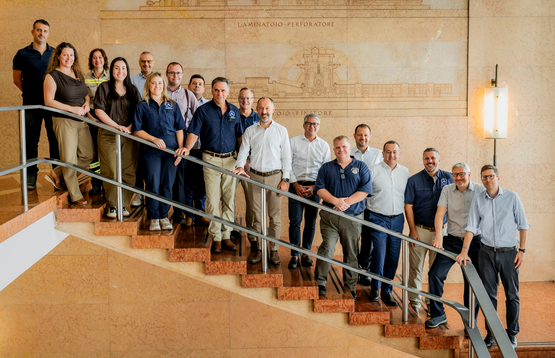
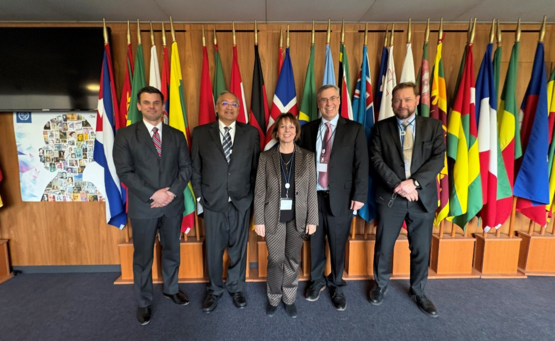
On June 29, 2026, PHMSA Administrator Paul Roberti and members of the agency's leadership and Office of Hazardous Materials Safety (OHMS) field team visited Tenaris' manufacturing facility in Dalmine, Italy. The visit provided firsthand insight into the production of high-pressure cylinders manufactured under a U.S. Department of Transportation (U.S. DOT) approval.
The Tenaris facility stands as a premier manufacturing hub, capable of producing approximately 100 tons of steel pipe per hour in support of diverse industrial applications and high-pressure cylinders that are imported directly into the United States for commercial use.
End-to-End Quality & Safety Oversight
As part of the tour, the PHMSA team observed the complete, end-to-end manufacturing journey, providing the team with a deeper appreciation for the advanced manufacturing techniques and rigorous quality control protocols required to satisfy strict U.S. DOT safety standards. This international engagement reinforces PHMSA's ongoing commitment to standardizing hazardous material transportation safety through proactive oversight and international collaboration.

New Research Report Released: Anhydrous Ammonia Nurse Tank Study
On May 29, 2026, the Office of Hazardous Materials Safety Research, Development & Technology (RD&T) team announced the publication of its latest final report: "Anhydrous Ammonia Nurse Tank Stress and Service Life Research Study."
Developed in close collaboration with the Volpe National Transportation Systems Center, this critical study dives into the performance, real-world service life and day-to-day structural stresses experienced by nurse tanks—a specialized non-specification packaging vital to the agricultural industry for transporting anhydrous ammonia fertilizer.
Why This Research Matters
To ensure agricultural safety and supply chain resilience, the collaborative research team analyzed the operational realities these tanks face every day. The comprehensive report features detailed findings on:
- Inspection Data and Vintage Analysis: Evaluating how tank age and location affect failure percentages and wall thickness change rates;
- Fatigue Screening: Assessing operational fatigue by evaluating repeated internal pressures alongside vertical, lateral, and longitudinal "G-load" accelerations; and
- Physical Impacts of Load Cycles: Establishing baseline estimations for the stress cycles that occur during a nurse tank's normal operating lifecycle—from filling to field transport.
Interested in diving into the technical details?
You can read the full report to explore deep insights into nurse tank inspections, fatigue thresholds, and the day-to-day physical impacts of normal operations by assessing the full report here: Anhydrous Ammonia Nurse Tank Stress and Service Life Research Study
2026 PHMSA Innovation Showcase Highlights Cutting-Edge Research and Development (R&D)
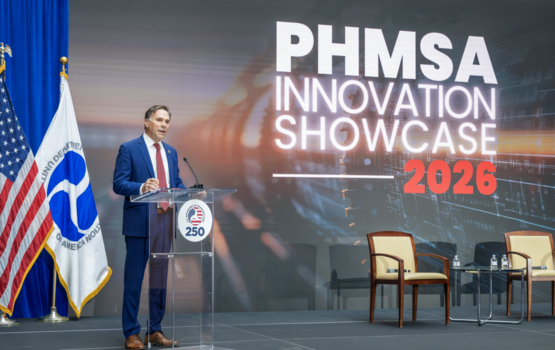
On May 20, 2026, the Innovation Showcase brought together industry leaders and Capitol Hill representatives for a dynamic, one-day event dedicated to the future of safety and hazardous materials management. The showcase spotlighted several groundbreaking R&D projects that are pushing the boundaries of technology and enhanced security:
- Energy Storage Safety Products International (ESSPI) Battery Logistics Integrated Safety System (BLISS): Advanced solutions targeting the growing complexities of battery transport and safety.
- Transportation Security Administration's (TSA) Hazard Detection Dogs: A firsthand look at the sophisticated canine teams keeping our transit systems secure.
- Aries' HAZMAT Spill Cleaning Technology: Next-generation response tools designed for rapid and efficient environmental cleanup.
- Newport Sensor's HAZMAT Monitoring System: Smart sensing technology for real-time hazard tracking and data collection.
- NC State's Metal Foams: High-strength, lightweight material innovations with massive potential for impact absorption and shielding.
- Nanosonic's Durable Placards: Ultra-resilient hazardous material communication built to withstand extreme environments.
- TDA's Battery State of Charge Sensor: Critical monitoring technology to prevent thermal runaway and ensure battery stability during transit.
Spotlighting the Path to Success
A major highlight of the day was the panel on innovations and Special Permits, featuring Lyla Evans from ESSPI.
Ms. Evans delivered a compelling message on the lifecycle of public-sector innovation. She emphasized that government-funded projects achieve their highest potential when the government adopts a holistic approach—not just funding the initial science, but actively nurturing its investments all the way to commercialization and regulatory integration.
The event underscored a clear takeaway: collaboration between Capitol Hill, federal agencies, and private innovators is essential for driving the next generation of safety infrastructure.
The Nose Knows: TSA's R&D in Canine Hazard Detection
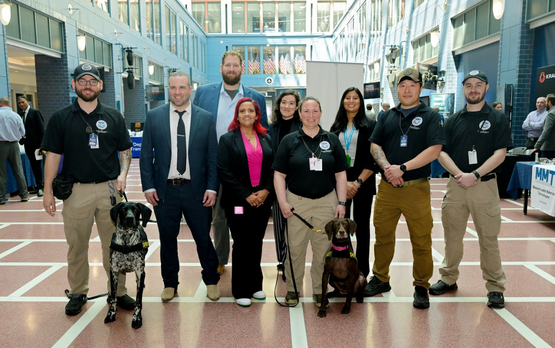
TSA wowed attendees with a live demonstration of how its elite canine teams utilize an incredible sense of smell to intercept hidden hazards. While TSA is well-known for deploying explosives-detecting dogs at airports nationwide, this showcase highlighted TSA’s latest cutting-edge research.
Innovating the Scent: TSA has recently invested in targeted R&D to isolate specific chemical compounds. These compounds will serve as crucial training aids, teaching canines to detect the unique scent profiles of undeclared batteries before they ever make it onto an aircraft.
A huge shout-out to the Ronald Reagan Washington National Airport TSA team who brought their brilliant canine heroes to the event, inspiring the community and proving that sometimes the best technology is a four-legged one!
Tank Car Innovations Put to the Test in Pueblo, Colorado
On April 7-9, 2026, the RD&T program participated in critical field testing at the Transportation Technology Center (TTC) in Pueblo, Colorado, advancing two key safety projects in collaboration with the Federal Railroad Administration (FRA). These evaluations provide vital data to enhance tank car survivability and incident prevention.
Redstone's Novel Thermal Coating Under Fire
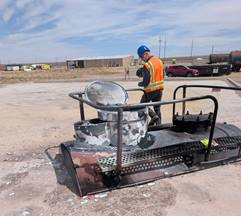
To improve protection for tank car protective housings, researchers subjected a novel thermal coating developed by Redstone to a rigorous torch flame test.
- The Results: The coating successfully delayed the temperature rise of the housing, marking a promising step forward.
Next Steps: The team identified areas for further testing to fully analyze and understand the coating's long-term performance under extreme conditions.
Hard Coupling Sensors Evaluate Impact Survivability
In a separate track, Friedman Research installed a specialized hard coupling sensor designed to detect high-impact events that risk damaging tank cars during switching operations.
- The Results: The sensor was put through a flat coupling test, yielding invaluable data on the structural survivability of tank car stub sills during impacts.
- The Big Picture: Collaborative testing events like these at the TTC are essential for transforming theoretical safety concepts into proven, field-ready tank car innovations.

Upcoming Live Webinar: How to Use the HMR
Hosted by PHMSA Expert Mike Senigo

Navigating the Department of Transportation's Hazardous Materials Regulations (HMR) can be challenging. Whether you are new to the industry or need a refresher, PHMSA is hosting a free, live interactive webinar, "How to Use the HMR" as the initial segment of its newly revised Webinar Series.
Session Details
- Date and time: Wednesday, August 19, 2026 at 2:00pm EST
- Webinar: How to Use the HMR
- Host: Micheal Senigo, Safety Outreach Specialist and Project Manager
- Cost: Free
- Skill Level: Beginner / Refresher
- Time Commitment: 90 minutes
- Registration link: Webinar Registration
What You Will Learn
This guided session breaks down the 49 Code of Federal Regulations (CFR) into practical, actionable steps. By the end of this 90-minute webinar, you will be able to:
- Navigate the 49 CFR: Easily look up specific rules and regulations.
- Master the Hazmat Table: Use the Hazardous Materials Table correctly to ensure compliant transportation of hazardous materials.
- Identify Key Roles: Clearly understand the basic responsibilities of a hazmat shipper.
- Locate Reference Numbers: Quickly find exact packaging and hazard identification requirements.
Why Attend? This is your opportunity to learn directly from a PHMSA expert, ask questions live, and secure the foundational knowledge needed to protect your team and keep your operations compliant.
Inter-Tribal Emergency Management Coalition (ITEMC) Summit 2026
On June 30 to July 2, 2026, the Oklahoma Pipeline Awareness Liaison (OPAL) joined regional partners in Tulsa, OK, for the 2026 ITEMC Summit.
This dynamic summit united Tribal, state, and federal agencies alongside private-sector stakeholders to fortify emergency response, recovery, and mitigation strategies for pipeline or hazardous materials incidents.
The gathering focused on deepening collaborative relationships and fostering shared expertise across various emergency management sectors to improve regional coordination and preparedness.

Shaping the Future of Hazmat Response: Insights from the 2026 Roundtable
On June 2–3, 2026, hazardous materials technical specialists and practitioners converged in Sterling, VA, for the 2026 Hazmat Roundtable.
Co-sponsored by PHMSA, the U.S. Fire Administration (USFA), and the International Association of Fire Chiefs (IAFC), this collaborative event brought together experts from more than 20 leading organizations.
Key attendees included representatives from the Federal Emergency Management Agency (FEMA), the Environmental Protection Agency (EPA), CHEMTREC, National Fire Protection Association (NFPA), International Association of Fire Fighters (IAFF), National Volunteer Fire Council (NVFC), and the National Association of SARA Title III Program Officials (NASTTPO), among others.
The core mission?
To confront the evolving challenges of hazmat preparedness, share organizational triumphs, and map out actionable solutions to protect communities and first responders alike.
Key Objectives & Focus Areas
The Roundtable format allowed members to dive deep into both legacy challenges and the future of emergency response. The primary objectives included:
- Prioritizing Critical Issues: Evaluating and ranking ongoing hazmat preparedness challenges carried over from previous sessions;
- Amplifying Current Successes: Finding innovative ways to leverage and scale the incredible work and best practices already being executed by member organizations; and
- Anticipating the Future: Spotlighting emerging trends, new hazards, and cutting-edge technologies that can be deployed to mitigate modern hazmat risks.
What's inside the 2026 Report?
The newly-released report details the high-level summaries of member presentations, captures the nuance of the panel discussions, and outlines the Roundtable’s official feedback, recommendations, and strategic plans of action.
Get the Full Report
Stay informed on the latest standards, technology trends, and tactical recommendations shaping the hazmat landscape.
To download the 2026 report and access resources from past sessions, visit the PHMSA Hazardous Materials Emergency Response Roundtable webpage.
Heating Up Relief: PHMSA Leads Engagement with International Partners to Safely Move Meals-Ready-to-Eat (MRE)
Small quantities of hazardous materials play a critical everyday role in delivering warm MREs to service personnel and disaster victims worldwide—completely eliminating the need for fire, fuel, or electricity. These life-saving meals rely on a water-reactive solid that generates heat upon contact with water.
While PHMSA has long exempted domestic MREs from the HMR due to their low transport risk, international regulations have historically lacked similar relief. This regulatory gap created severe logistical bottlenecks, hindering the rapid deployment of MREs for global defense and humanitarian missions.
Breaking the International Bottleneck
To resolve these transport inefficiencies, on May 18, 2026, PHMSA and Office of the Secretary of Transportation (OST) staff teamed up with representatives from the U.S. Army and the U.S. Defense Logistics Agency (DLA). Together, the U.S. delegation engaged transport officials at the United Nations Economic Commission for Europe (UNECE) Joint Meeting to advocate for a global solution aligned with safe U.S. standards.
The collaborative effort achieved a major breakthrough:
The Milestone: In May 2026, Germany initiated a Multilateral Agreement (MLA) based on the U.S. proposal.
The Impact: This agreement paves the way for European nations to sign on, allowing MREs to be transported safely and efficiently throughout the European Union using the streamlined U.S. approach.
Big Wins for Efficiency and Taxpayers
Key Takeaway: By aligning international standards with domestic policy, this initiative eliminates unnecessary costs to the American taxpayer and reduces bureaucratic red tape.
Beyond the financial savings, this agreement delivers a massive operational victory as it frees defense logistics personnel from the grueling, time-consuming tasks of repacking and relabeling shipments, allowing them to redirect their focus to critical mission-essential duties.
What's Next?
While the MLA is a massive win for European theater operations, the work isn't finished. The PHMSA international team is already shifting its focus to the UN Transport of Dangerous Goods Sub-Committee to spearhead a permanent, long-term multimodal solution for global transport.

Is Hazardous Matt Hiding Outdoors? | ||
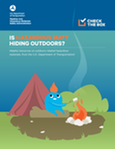
| Hazardous Matt provides essential guidance for outdoor enthusiasts on identifying, handling, and shipping hazardous materials commonly used in activities like camping, hiking, and hunting. It highlights the importance of following the U.S. Department of Transportation (DOT) regulations to ensure safety and compliance when transporting or shipping these items. For more information, click here. | |
Request for Comments for the 2028 Emergency Response Guidebook
PHMSA is reminding readers of the open period for comments on the 2028 Emergency Response Guidebook (ERG). To pursue our objective of continually improving the ERG, PHMSA welcomes comments on new methodologies and considerations for future editions of the guidebook.
Please submit any recommendations to improve the 2028 ERG to ERGComments@dot.gov.
Comments must be submitted by January 1, 2027, for consideration.
The contents of this newsletter are not meant to bind the public in any way. This newsletter is for informational purposes only and informs the public of existing requirements under the law or agency regulations.
PHMSA develops compliance assistance materials that make it easier to understand and comply with the HMR. Electronic versions of these resources are available at: https://www.phmsa.dot.gov/training/hazmat/publications.
Additionally, the Hazardous Materials Information Center (HMIC) remains an essential resource for the transportation industry, general public and other PHMSA stakeholders in their efforts to safely package and/or transport hazardous materials across the United States and abroad. For more than 25 years, the HMIC has been staffed by highly trained specialists who are ready to assist with a wide range of regulatory questions pertaining to the Hazardous Materials Regulations (49 CFR Parts 171-180), as well as federal and state requirements.
The HMIC operates Monday through Friday, from 9:00 AM to 5:00 PM Eastern Time.
For additional information contact:
The Hazardous Materials Info Center
1.800.HMR.4922 or (1.800.467.4922)
E-mail: infocntr@dot.gov
Website: https://www.phmsa.dot.gov
Questions or suggestions for the next newsletter?
Email Training@dot.gov, with the subject: "Newsletter."
To subscribe to Hazardous Matters, Click Here.
To access archival issues of this newsletter, Click Here.
Last updated: Thursday, August 13, 2026